
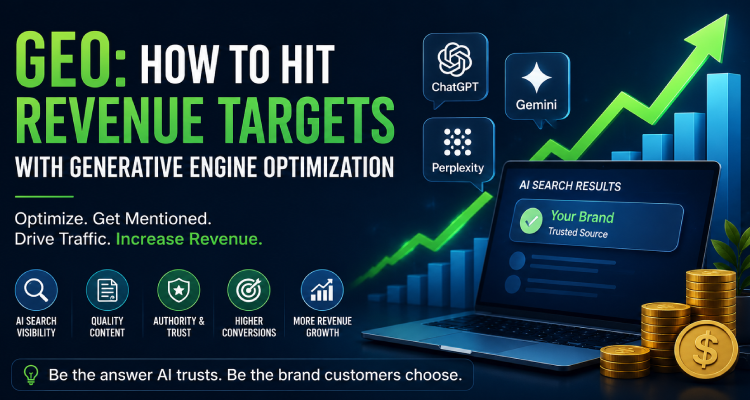
The rise of AI-powered search has transformed how businesses attract customers online. Traditional SEO remains important, but Generative Engine Optimization (GEO) is quickly becoming a key strategy for companies that want to maintain visibility in AI-generated answers from platforms like ChatGPT, Google AI Overviews, Gemini, and Perplexity.
Instead of focusing only on rankings and clicks, businesses must now optimize their digital presence to become trusted sources that AI systems reference. Organizations that adapt early are more likely to achieve consistent traffic, qualified leads, and long-term revenue growth. Industry experts increasingly view GEO as a necessary evolution of search marketing rather than a replacement for SEO.
What Is GEO?
Generative Engine Optimization is the practice of optimizing your content so AI search engines can understand, trust, and reference it when generating responses to user queries.
Unlike traditional SEO, which aims for high rankings on search engine results pages, GEO focuses on becoming the preferred source that AI assistants cite when answering questions.
This means your content must be:
- Accurate and fact-based
- Well-structured
- Easy for AI to interpret
- Supported by authority and expertise
- Updated regularly
Why Revenue Depends on AI Visibility
Search behavior is changing rapidly.
Many users now ask AI assistants for recommendations instead of browsing multiple websites. If your brand isn’t included in AI-generated responses, you lose valuable exposure before users even visit a search engine.
Businesses that appear in AI answers benefit from:
- Higher brand awareness
- Better-qualified visitors
- Increased customer trust
- Improved conversion rates
- Reduced dependency on paid advertising
As AI becomes a primary discovery channel, visibility within AI responses can directly influence sales and revenue growth.
1. Create Content That Solves Problems
AI systems prioritize content that directly answers user questions.
Instead of writing only keyword-focused articles, create comprehensive resources that solve real problems.
Good content includes:
- Step-by-step guides
- Frequently asked questions
- Comparison articles
- Industry research
- Practical examples
- Actionable tips
The clearer your content is, the easier it becomes for AI models to reference.
2. Build Topical Authority
Publishing one article isn’t enough.
Develop complete content clusters around your niche.
For example, a digital marketing website should cover:
- SEO
- GEO
- Content marketing
- AI search
- Technical SEO
- Link building
- Local SEO
The more expertise your website demonstrates, the more trustworthy it becomes to both search engines and AI systems.
3. Strengthen Your Brand Reputation
AI doesn’t rely solely on your website.
It also considers your overall online presence.
Improve your authority through:
- Guest posting
- Expert interviews
- Digital PR
- Industry mentions
- Customer reviews
- Social media engagement
A strong brand footprint increases the likelihood that AI platforms will mention your business when answering relevant questions.
4. Structure Content for AI Readability
Well-organized content is easier for AI systems to interpret.
Best practices include:
- Clear H2 and H3 headings
- Short paragraphs
- Bullet lists
- Tables where appropriate
- FAQ sections
- Simple language
Avoid overly complex formatting that makes content difficult to process.
5. Demonstrate Experience and Expertise
Content backed by real-world experience performs better than generic AI-generated text.
Include:
- Original research
- Case studies
- Customer success stories
- Expert opinions
- Personal insights
- Industry statistics
Authentic expertise helps establish trust with both users and AI search engines.
6. Keep Information Fresh
AI systems increasingly favor current and accurate information.
Review older articles regularly by:
- Updating statistics
- Refreshing screenshots
- Adding new examples
- Removing outdated advice
- Expanding important sections
Fresh content signals reliability and relevance.
7. Optimize Beyond Your Website
Modern GEO extends beyond owned content.
Improve visibility across:
- YouTube
- Industry publications
- Podcasts
- Review websites
A diversified online presence strengthens your brand’s authority and increases the chances of being cited by AI systems.
8. Measure AI Performance
Traditional SEO metrics no longer tell the complete story.
Track indicators such as:
- AI referral traffic
- Brand mentions
- AI-generated citations
- Engagement quality
- Conversion rates
- Revenue from AI-driven visitors
Monitoring these metrics helps identify which content performs best in AI search environments.
Common GEO Mistakes
Many businesses still make avoidable errors, including:
- Publishing thin content
- Overusing keywords
- Ignoring authority signals
- Neglecting content updates
- Creating articles without user intent
- Failing to build a recognizable brand
Avoiding these mistakes can significantly improve your AI visibility.
GEO and SEO Work Together
GEO should complement—not replace—traditional SEO.
Strong technical SEO, quality backlinks, fast-loading pages, and excellent user experience remain essential. GEO builds on these foundations by ensuring your content is also optimized for AI-generated search experiences. Experts describe AI visibility as an expansion of SEO into new discovery channels rather than a separate discipline.
Final Thoughts
Generative Engine Optimization is reshaping digital marketing. As AI assistants become a primary way people discover products, services, and information, businesses that invest in high-quality content, topical authority, structured information, and a strong online reputation will be better positioned to reach customers and hit their revenue targets.
The future of search isn’t just about ranking first—it’s about becoming the trusted source AI platforms choose to recommend. By combining proven SEO fundamentals with a forward-looking GEO strategy, businesses can build sustainable visibility and drive meaningful business growth in the AI era.
