Artificial intelligence is rapidly transforming digital marketing, and OpenAI appears to be taking another major step toward reshaping online advertising. According to recent reports, the company is experimenting with a new ChatGPT advertising format that replaces traditional landing pages with AI-powered business agents.
If this approach becomes widely available, it could fundamentally change how businesses interact with potential customers online.
What Is the New ChatGPT Ad Format?
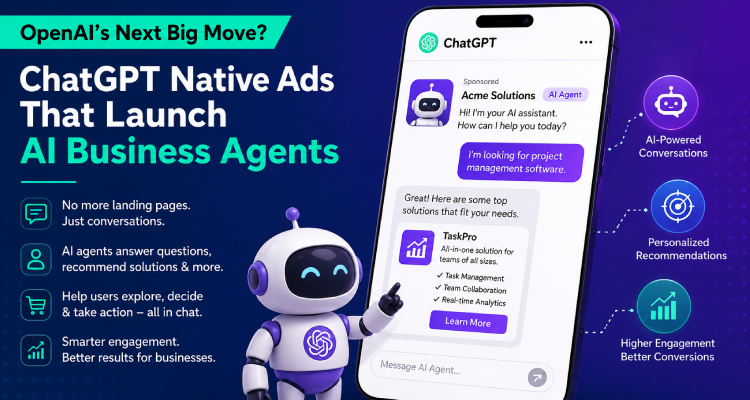
Instead of sending users to a company’s website after clicking an advertisement, the new format reportedly opens a dedicated AI conversation inside ChatGPT. This AI agent can answer questions, explain products, recommend services, and help users complete tasks without leaving the chat interface.
This conversational experience aims to provide immediate assistance rather than requiring users to browse multiple web pages.
Why This Could Change Digital Advertising
Traditional online advertising usually follows a simple journey:
User clicks an ad.
User visits a landing page.
User searches for information.
User fills out a form or makes a purchase.
With AI-powered chatbot ads, that process becomes much more interactive. Instead of reading static content, users can ask questions naturally and receive personalized responses from an AI assistant.
This could improve customer engagement while reducing the friction often associated with traditional landing pages.
Benefits for Businesses
If OpenAI launches this advertising model, businesses may gain several advantages:
1. Better Customer Engagement
AI agents can provide instant answers, keeping users engaged throughout the buying journey.
2. Personalized Conversations
Every visitor can receive recommendations based on their questions rather than viewing the same static webpage.
3. Higher Lead Quality
Businesses may collect more qualified leads because users interact directly with an AI assistant before submitting contact information.
4. Faster Decision-Making
Customers can compare products, understand pricing, and receive recommendations in real time.
Benefits for Consumers
Users may also enjoy a more efficient shopping experience.
Potential benefits include:
Instant product recommendations
Quick answers to common questions
Personalized buying advice
Less time navigating websites
Easier product comparisons
Instead of clicking through multiple pages, much of the buying journey can happen inside a single conversation.
How AI Agents Could Work
A business-specific AI agent may be trained using information such as:
Product catalogs
Service descriptions
Pricing information
Frequently asked questions
Company policies
Appointment scheduling
Customer support knowledge
This enables the AI to provide relevant and accurate responses while helping users complete actions such as booking appointments or requesting quotes.
Impact on SEO and Digital Marketing
The rise of conversational AI advertising could significantly affect SEO professionals and marketers.
Instead of focusing only on website optimization, businesses may also need to optimize their AI knowledge, structured content, and product information so AI agents can deliver accurate responses.
Future marketing strategies may include:
AI-ready content
Structured business data
Conversational product descriptions
Knowledge base optimization
AI agent training
Challenges Ahead
Despite its potential, several questions remain:
How will businesses measure campaign performance?
Will users trust AI-generated recommendations?
How will advertisers control conversations?
What privacy protections will be implemented?
How will AI avoid misleading or inaccurate responses?
OpenAI will likely need to address these concerns before expanding the platform.
The Future of AI Advertising
The advertising industry has evolved from banner ads to search ads, social media ads, and now conversational AI experiences.
If OpenAI officially launches AI-powered chatbot ads, businesses may shift from optimizing landing pages to creating intelligent AI assistants capable of guiding customers through the entire buying journey.
This represents a significant evolution in digital marketing, where conversations become the primary conversion tool rather than traditional webpages.
Final Thoughts
OpenAI’s reported chatbot-native advertising model signals a future where AI agents become the first point of contact between businesses and customers. By replacing static landing pages with interactive conversations, companies could deliver faster support, more personalized recommendations, and a smoother customer experience.
Although the technology is still emerging, marketers should begin preparing for an AI-first advertising landscape by investing in high-quality content, structured data, and conversational customer experiences.